
Sister Cecile Denise Glodek, OSF
October 19, 2026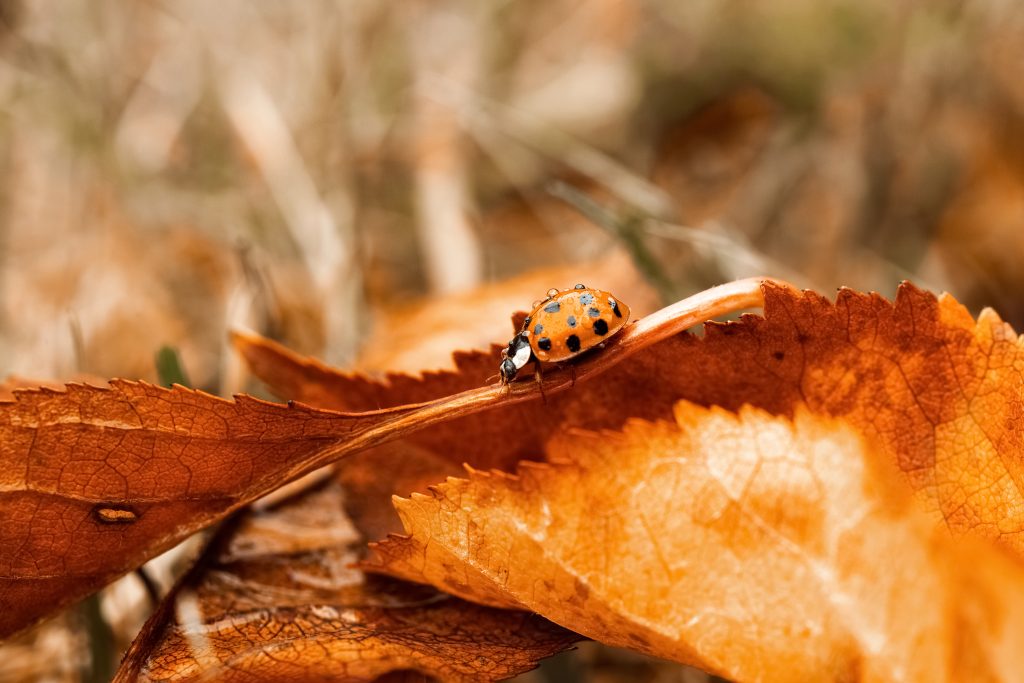
Fallen leaves are more than autumn decorations or yard waste—they are essential habitat. Leaves provide food and shelter for wildlife, including turtles, toads, birds, and insects. Many moth and butterfly caterpillars depend on fallen leaves to survive the winter. As leaves decompose, they also return nutrients to the soil, suppress weeds, and help retain moisture.
Yet, millions of tons of this natural resource end up in landfills. The National Wildlife Federation reported that leaves and other yard debris accounted for more than 13% of the nation’s solid waste—approximately 33 million tons annually. When buried in landfills without sufficient oxygen, this organic matter releases methane, a potent greenhouse gas. Why throw away something that can nourish our soil and shelter wildlife? (Source)
How can you put fallen leaves to work?
- Leave them be: Allow leaves to remain beneath trees and shrubs where appropriate.
- Mulch naturally: Move leaves into garden beds or shred them for mulch.
- Make compost: Combine leaves with grass clippings to create nutrient-rich compost.
- Create habitat: Build brush piles with leaves and branches to shelter wildlife.
- Share the abundance: Offer extra leaves to neighbors or community composting programs.
In Laudato Si’, Pope Francis calls us to care for our common home. Leaving the leaves is a simple way to honor creation, protect biodiversity, and allow nature’s gifts to nourish new life.