

As of February 23, we can excitingly say our two beehives are alive. There are a few indicators that tell us so, without opening the hives in the colder temperatures. Each week, our beekeepers will visit the hives and listen for a soft buzz. Sometimes a knock is needed to get a clear answer from the bees that they are alive inside.
We also check their bottom tray. When bees are active and feeding on honey to survive the winter, wax cappings from the honey stores will fall to the tray. This activity can reveal so much about what is happening inside the hive without opening it up—the size of the colony, where they are in the hive, and even how much they are eating! When we see the wax cappings in the tray, it is another sign there is life inside the hive!
Lastly, on the occasional warmer days, the bees will come out for a cleansing flight—a moment for the bees to release their excrement. We have witnessed both our hives participate in this flight—a sure sign that they are surviving our harsh winter this year.

A New Home for Our Bees
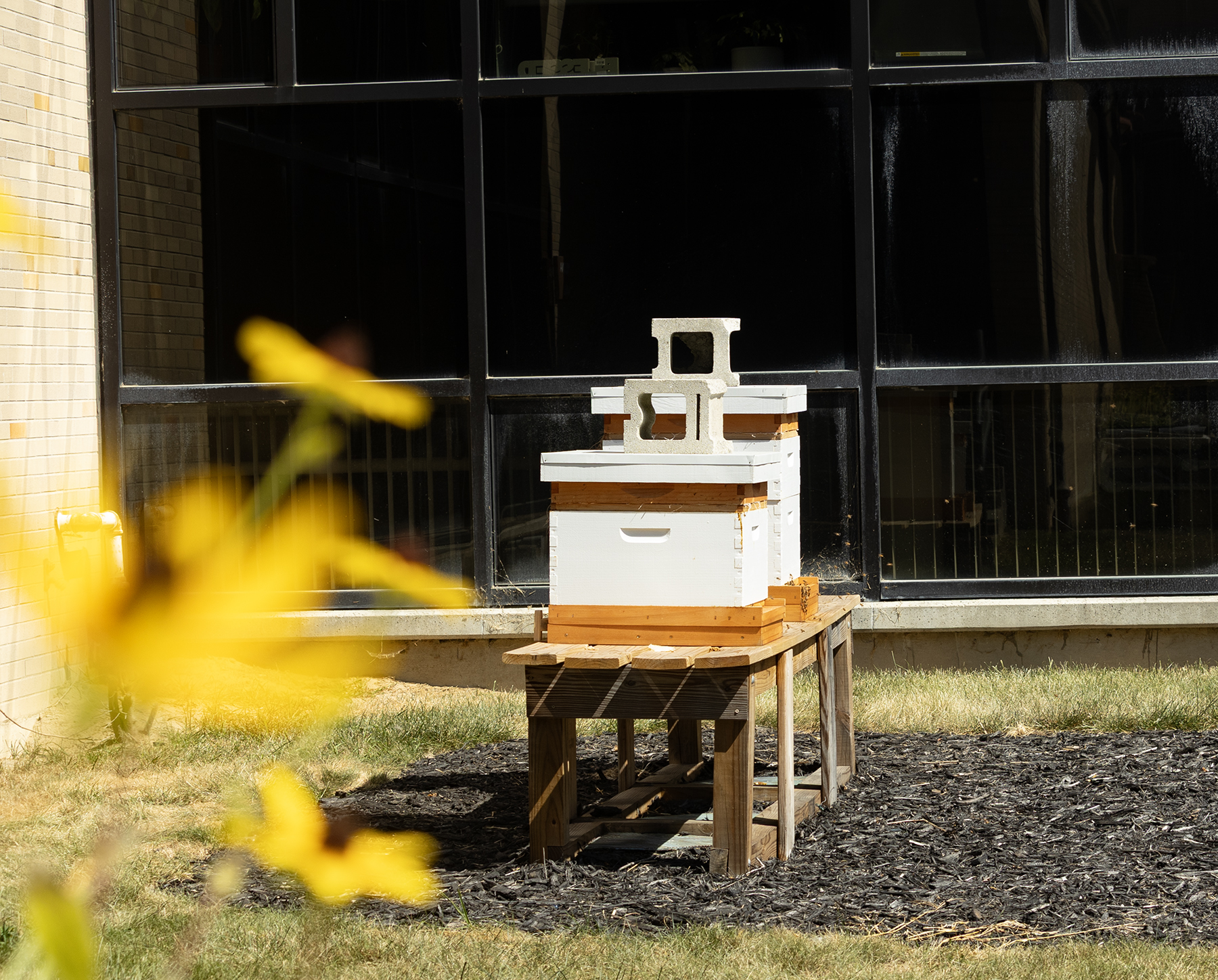
Last spring, our bees were relocated to a welcoming new home in a sheltered corner of campus, surrounded by nearby buildings. The new location protects the hives from strong winds while offering the community a front-row view of daily hive activity. The space has become a place where everyone can safely observe the bees as they buzz, forage, and thrive.


Learning Through Challenges
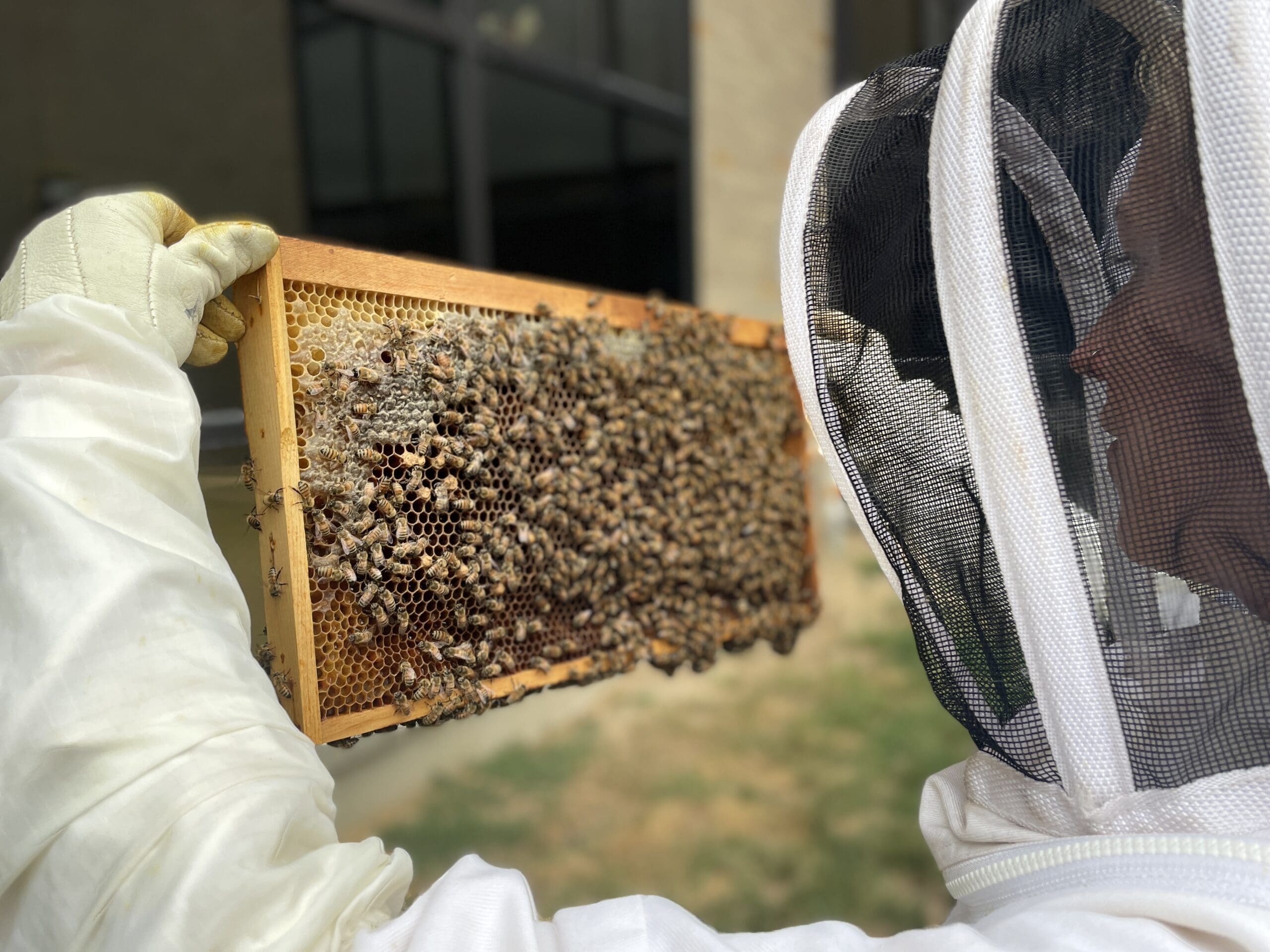
Each hive—Tulip and Leona—presented its own challenges throughout 2025. Midway through the year, Tulip unexpectedly lost her queen, prompting careful observation and problem-solving by our beekeepers. A new queen was introduced, and the colony successfully accepted her. With time, Tulip rebuilt her population and entered winter strong—an encouraging outcome and a valuable learning experience for the season.